Howdy, Stranger!
It looks like you're new here. If you want to get involved, click one of these buttons!
Categories
2. Environmentalism in the United States

Reminder: Zoom Today
Watch If a Tree Falls: 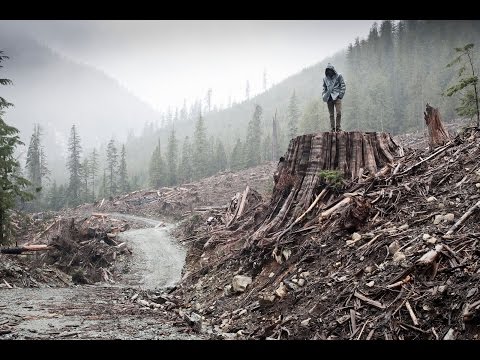
Dowie, Mark. 1995. “Preface” Losing Ground.
Dowie, Mark. 1995. “1: The Environmental Imagination” Losing Ground.
Dowie, Mark. 1995. “2: The Culture of Reform” Losing Ground.
Mark Dowie is one of the pre-eminent environmental journalists in the United States, and his book is one of the best reviews of the major players in the US I’ve ever seen.
Had you heard of some of these organizations before? Did this change your perspective on them? Where did the major players in the (North)American environmental movement come from, and how did they change over time (the 60s-70s-80s saw some big shifts)? Why did they change? What role does funding play? Where should an effective environmental organization get its money? What about social movements that operate with no funding? Where do you stand on radical groups like ELF?
Comments
I am familiar with the National Audubon Society, Green Peace, and the U.S. Forest Service, of course, but was unfamiliar with the other organizations mentioned in Dowie's chapters. My perspective on the Audubon society has previously been very positive as I love the illustrations of birds they are so famous for as well as their efforts to help save bird species. In the reading, specifically on page 56 in chapter two, I was disappointed to hear of the corporate philanthropy going on with their board membership. I think that Vice President Robert San George was grossly naive in thinking that any corporation with representation on the board would not show conflicting interests in the direction of the Society. In this way, my opinion of the Society was tarnished, but that may be the case with most organizations when you delve deeper into the motives of board members.
On the one hand, this practice is so commonplace and beneficial for fundraising that it seems complicated to regulate or even condemn if the outcome is improvements in environmental policy or species protection. I have researched the possibilities of GMOs in other classes. I have come across Green Peace's harsh opposition to crops like 'golden rice' which could help cure vitamin A deficiency in developing countries. Their radical approaches towards shock-value content sent through direct mail for fundraising still uphold my negative view of them.
The major players of the North American environmental movement were Pinchot with his ideas of "wise use" conservatism becoming mainstream in the early 1900s. After him, I see significant change as coming with Carson's 'Silent Spring' publication in 1962, as does Dowie himself. The shift of the wider public taking an interest in the environment in the 1960s and Carson's being a woman demonstrate a trend towards all groups of people, not just white intellectual men, trying to relate themselves to the environment. In the 1970s, the "environmental vote," as Dowie calls it, carries weight in politics, and legal fights increase because the people now value environmentalism as a movement and push for reform.
The role of funding infuses politics more broadly into environmentalist organizations as members, corporations, and foundations use their donation to determine the trajectory of each organization, their goals, and their methods. In my opinion, direct mail is too hypocritically waste-producing, and no longer gets a high response rate, and corporate philanthropy, while providing significant income, feels like 'selling out' your organization to a brand. Foundation support appears to me to be the most effective of the three because you maintain some autonomy with where the money goes, and there are checks and balances on the progress of projects which can lend itself to a more democratic decision-making process. Social movements that operate with no funding are admirable but at a clear disadvantage because in our capitalist economy, 'money talks' as Dowie points out. More pure motives may be witnessed when looking at these movements, and they are more accessible to the average citizen, which I like.
ELF and other eco-terrorism groups and radical groups do not evoke a strong response from me. I think the grassroots and non-harming people aspects of the organization, as well as the strong sentiments behind their actions, are laudable. The destruction of property and targeting of individual farms, buildings, etc. is harmful because the people working there may feel similarly about environmental preservation but need to make a living somehow. The arsons impact a broader range of people then I think they consider, and like the last arsons mentioned in the video, they are not always planned on correct information. I believe non-violent action through protesting, while conservative, creates a sense of rationality that government officials and the other 'bad guys' see as conducive for conversation.
I’d heard of many of these organizations before. Growing up, I used to attend the Brower Youth Awards, named after David Brower of the Sierra Club. The big greens were definitely the only environmental organizations that I was aware of growing up and I remember receiving direct mail from Green Peace and similar organizations. Dowie’s chapters definitely confirmed some of the vulnerabilities and weaknesses of the mainstream green orgs that I’ve come to learn over the last few years.
I think some of the most interesting shifts was from protest and bigger actions in the 60s, less compromising etc., to major policy wins in the 70s and the moves toward litigation. With Reagan coming into power and being able to appoint judges that were not supportive of environmental regulations. This shift felt very similar to what is going on today with environmental litigation under the Trump administration. Litigation as a tool also became less successful through process in which boards and funders dampened down goals for the more aggressive young environmental lawyers. Dowie argues, and I would agree, that money shapes the agenda of many environmental organizations. The question of where an effective environmental organization should get their money from individual donors, but I’m not quite sure of how to navigate the issues that cropped up with direct mail campaigns influencing organizations away from their more aggressive environmental goals. I tend to have more faith in social movements that operate with no funding, but issues of funds tend to come up, even if it’s coming directly from its members or members sacrificing time from jobs etc. to do the work to promote the movements goals. This is often where class divides come into social movements.
In terms of the ELF, I think the film did a good job of showcasing how the ELF moved towards the arsons as a means of proving their point. While I don’t think the tactic is very effective in achieving the groups’ goals given societal norms of what protest can look like and what is acceptable, I can understand the frustrations with the ineffectiveness of non-violent protest when it is only met with violence by the police. I don’t think I consider groups like the ELF as terrorist organizations.
I had heard of some of the organizations before, The Audubon Society and the Sierra Club are common names I’ve heard associated with the movement. This reading did however give me a deeper insight into these groups and taught me about their history and how they have changed. The major players in the North American Environmental movement originated from white men high in society. The tended to be rich and well educated from urban areas with little experience in the outdoor. They had interest in preserving the natural world, ideas of wilderness stemming from John Muir and other early environmentalists, it was more preservation than conservations. They sought to avoid damming and protect millions of acres.
The major players of the time were the Wilderness Society and the Sierra Club, among others. In the 1940s the Wilderness Society sought to work with other environmental groups. The work of these groups led to the Wilderness Act in 1964 which mandated the government to preserve large plots of land. By the 1960s after the Wilderness Act was passed environmentalism was becoming a more mainstream idea. By the 1970s the movement was gaining momentum and support from the public. Richard Nixon signed the National Environmental Policy Act into law due to strong public support. Over the next 10 years 23 environmental acts were passed (pg. 33). The environmental movement seemed to have lost steam in the 1990s. Environmental organizations were reliant on donations from the public and began to focus on issues that people would care about and money into. For example, baby fur seals over potentially more ecologically relevant issues. These groups also began getting large donations from major oil and gas company, among other major polluters. These donations created a gray area within these movements making the organizations rely on the very companies they are against.
I hold similar views of ELF and like-organizations. I have heard of ELF before but have never been exposed to such a specific account of the organization. I think the filmmaker, in interviewing individual members of ELF, did a wonderful job personalizing the topic at hand. I also really appreciated the critique of language and titles (ecoterrorist/ecoterrorism) and the way the documentary highlighted associations with the term 'terrorism' or 'terrorist' which were completely antithetical to the intentions and actions the members of ELF engaged in. ELF would not be considered a terrorist group to me and I did not see any individual prtrayed in the film as a criminal, let alone terrorist. Although when documentary mentioned people whose goals were aligned with ELF saw their actions as justifiable while people who had dissimilar enviromental intentions saw what they did as an act of terrorism. I am no exception to this rule and would love to hear form someone who wanted radical environmental justice but considers ELF a terrorist organization. I am sure this combination of ideology is not hard to come by, it is just not a position I hold.
I agree with your opinion of the ELF. In the beginning of the film I was watching thinking that the ELF was crazy and that arson was a clear act of terrorism. After seeing footage of the protests in the northwest at the time I saw their frustration and justification for the arson. I also found the debate about defining the ELF as a terrorist group interesting, with different people having differ views of what defines terrorism. Although I don't agree with tactics the ELF used I think the arson is very telling of the frustration the environmental movement was facing at the time. From the Dowie reading it seemed like the 90s marked a lack of progress for the movement and that mixed with increased police brutality is I think why ELF resorted to arson. They wanted the movement on the forefront of the news and in the minds of Americans but in doing so they created a stigma of violence and fear associated with environmentalists.
In the readings, Dowie did a great job of contextualizing the modern environmental movement. Specifically, I liked how he explained key individuals and collectives which have transformed the environmental movement. The impact of Rachel Carson's Silent Spring in the 60s made a major breakthrough to the American public and ultimately affected the environmental movement positively. In the decade that followed, major environmental action was put ni place legislatively, for example the Clean Air and Clean Water Acts. On the other hand, the Reagan Administration negatively impacted the trajectory of the American environmental movement and dismantled it legislatively. Simultaneously, the American public lost its environmental momentum. Ultimately, it seems like the American environmental movement changed as a result of both individuals and collectives as well as political legislation and personal initiative. Many of the positive effects were a result of palpable environmental degradation to the average american. I am not left with an official stance on where funding should come from. Unfortunately, individual funders and funding from organizations have personal agendas, often but not always positive.
Similar to what others are saying I had heard of a lot of these groups before. I think my perspective on them changed some after reading some of Losing Ground. I definitely feel like the funding from individuals sort of foundation style can be problematic. It's hard to effectively create change when you are financially indebted to people, especially people with differing political agendas who may not want to rock the boat too much or are scared of causing too much anger. It's especially horrifying to read about companies like Monsanto sponsoring Earth Day. That's why I think I'm inclined towards the social movement model. Making change within a political system which in of itself allows for environmental degradation seems difficult and not super effective. Sometimes I think some disruption can be positive in drawing attention to issues, and refusing to allow people to live with the status quo, which was/is serious environmental degradation. Working within the political common sense at the time in order to change didn't appear to function that well.
I totally agree with your analysis of the major players and how organizations shifted Madison. I think part of the ways in which these groups came out of preservationist tendencies contributed to their lack of efficacy to an extent. It seems like the ways in which people understood the environment also really impacted the causes they pushed. While the public, the people the organizations were getting their money from, understood the environment as wilderness, or wildlife, or something removed from themselves, organizations like the Sierra Club are boxed into telling removed stories. However, once the environment also means your backyard, like Rachel Carson helped the public understand, telling a story about people's water and lungs getting polluted becomes viable as well. I think I feel frustrated by the focus on environment as something distant, and wish that organizations, especially after Silent Spring, would use cases that touch a broader audience than those already represented in the environmental organizations themselves. Of course, accepting money from oil and gas corporations only exacerbates the problem, leaving orgs unable to address issues which implicate oil and gas producers as potentially at fault.
I think what you both are saying makes a lot of sense. I think the film did a good job capturing different perspectives on the ELF but it was hard not to feel like the word terrorist was a stretch, especially considering how Daniel talked about being sure to never harm any person. I do feel frustrated by the lack of understanding that went into some of those actions (thinking trees were GMOs and being mistaken). It seems like if you're going to do something destructive you need to be 100 percent sure of the cause. I think there are other, non-violent, strategies for the work ELF was trying to do. The scene with the police officers relentlessly attacking the protestors with pepper spray also made me super furious. I guess because Daniel who very intentionally never cause physical harm to a person got 7 years and was called a domestic terrorist, but law enforcement can use as much violence as they want with little repercussion. Also, the level of violence in response seemed wildly disproportionate to the action itself. That really served as a reminder to question the labels, especially those in the criminal justice system are given. Also made me think about who gets to be violent and what causes can people accept using violence over?
I think your point about Reagan coming to political power and appointing judges that were not supportive of the environmental agenda and connecting that to the Trump administration is very interesting and not a connection I made. It shows how although we consider ourselves a democracy and want the government to support the goals of the people that is not always what happens. For example, this reminded me of what someone mentioned today over zoom. The Trump administration is not enforcing many environmental laws due to the pandemic and the EPA went along with it. Now many companies have less strict environmental standards to meet. This is an interesting outcome of coronavirus.
I think your point about acting within the political common sense of the time in order to create change is a good one. Sometimes, and I believe more often than not, the status quo will only be upheld by working within the ideological bounds of a certain period. I definitely had similar reactions to reading about Monsanto sponsoring Earth day and corporate green washing. I particularly was aggravated by the fossil fuels industries contributions as if that negated the harm that they do. The pr and marketing within this whole structure is hard to counteract. Once people associate the word environmental with a certain organization, it's hard to point out the role they play in environmental degradation.
Before watching the documentary I did not exactly look too fondly upon using violence to create change, specifically with the environmental movement. After, however I believe it can be effective and, in some cases necessary. If we look at something like the civil rights movement, there were people in power fighting for change and for the equality of all people. It was not, however, until people took it to the streets and demonstrated, that actual change started to show.
Is anyone totally against the property damage caused by organizations like the ELF to encourage change?
Also I saw in the doc a lot of anarchy signs, does anyone think that its a little bit hypocritical to mix anarchy and environmental justice?
The readings/documentary also made me think of the civil rights movement, @slothman. The civil rights movement also seems to of had/ have somewhat divide in approaches. On one hand that approach being nonviolent and the other being more violent. Divergent approaches to the same ultimate goal is seen in many social and environmental movements as well as in the overlap of the two. I wonder how this divergence effects the justice outcome both parties strive for. I like that you brought up anarchism in relation to the environmental justice movement. In which ways are you alluding to the combination being hypocritical? (open to anyone's answer not restricted to slothman).
I agree that violence can be very effective and it is definitely faster than other methods but I don't think that it is completely necessary. I'm not against the property damage done by ELF but I do think that it isn't the right kind of publicity for an organization fighting for protection of the environment. The discussion on the phrase eco-terrorist was also really interesting to me and made me wonder about how drastically the publicity of the environmentalist fight would be different without it. Arson and "terrorism" are more eye catching in the news than slow moving peaceful protests and this helped the movement gain much more traction.
I think the civil rights movement is an interesting example because most of the violence came from the police and racist Americans which made the movement even more impactful.
I had heard of a majority of these organizations, mainly with exception to the SCLDF, EDF, and NRDC. These readings absolutely changed my perspectives on essentially all of them. While I am definitely reading Losing Ground with a grain of salt, as it is just one mans opinions, I cannot but help restructure my thoughts on the environmental movement and the organizations mentioned. The role of money and wealth in these discussions seems to be everything. The companies that invested in Earth Day 1 completely shocked me and I guess that really is where all this stems from. It bring up an unclear argument though, that who else is going to fund these organizations? It seems to me like a bigger issue- in America money means power and power means everything. Unfortunately, the environmental movement is not above this and it feels simplistic to drastically judge and condemn it for not being so. At the same time, we can't just ignore it's faults and accept it. I am pretty unclear on what type of movement the environmental movement is- while there is definitely a social component (especially in the beginning), the modern day movement is much more corporate and political. It feels like the corporations/government are making ecological advancements for the pure reason of people pleasing as minimally as they can get away with- not that the people ourselves are making the difference. It’s a hard movement because as Dowie discussed, there's not currently an accessible place in it for a middle man, passionate about the earth, to make a substantial difference.
On another note the ELF is so fascinating to me. I am pretty sure I don’t think the arson acts count as terrorism. I looked up the definition of domestic terrorism on the FBI website, and it is defined as, "Violent, criminal acts committed by individuals and/or groups to further ideological goals stemming from domestic influences, such as those of a political, religious, social, racial, or environmental nature." Based off this definition, the arsons definitely qualify, however so do hate crimes, cults, and just SO many other crimes!! Daniel said something along the lines of call it what it is- its destruction of property. The movie was an interesting contradiction to Dowie's claims that the environmental movement is/has been way too "polite." At the end of the film, Daniel says "When your screaming at the top of your lungs and no one hears you… what are you supposed to do?" That’s something that I can really empathize with because he is totally right, what are you supposed to do? Environmental justice seems like an uphill battle and it’s an incredibly frustrating concept.
I see why you are critical of the arson. Violence can undermine the credibility of an organization and perhaps be counter productive in the end. However, when violence does instigate change, it seems to be more direct and immediate. Because it is impossible to gauge the unintended outcomes of any organization's actions, especially actions that are counter to what is accepted in the mainstream, unexpected or undesired consequences are often a result. The actions we saw in the documentary which were a gamble of unintended consequences were extreme examples of a choice every environmental justice organization and individual has to make. To me it was incredibly unfortunate that the individuals in the documentary paid such a steep price for their actions. If the legal system is intended to protect the well being of the country at large (we know this doesn't always happen), then the "ecoterrorists" had like intentions - to protect the country at large. After watching the history leading up to the arson, I see why the"ecoterrorists" acted in the way they did and also see why they deemed it necessary.
I see where you're coming from @slothman with the hypocritical perspective. My interpretation is that anarchy represents basically free will and is anti-authoritarian. On one hand, this aligns with early environmentalism as it is trying to remove the presence of authority or governmental funded efforts such as deforesting or what not to support the economy. It reminds me of Dowie's presented dichotomy between conservation and preservation in the environmental movement. Anyways, a more modern environmentalism standpoint doesn't seem to align with the concept of anarchy anymore. Nowadays it seems to be focused on passing bills and getting MORe government regulation for the earth. In that sense it does seem hypocritical. Through the idea that the footage was old however, I cant really find any irony.
@cara I think the main problem I have with associating the anarchy movement with the environmentalist movement is the fact that corporations are unable to regulate themselves in regards to the environment. Anarchy supports no government and no regulation, no police even. I guess I see that with anarchy people would have more control with regards to what corporations are doing (ie burning down a factory) but when it comes down to it whoever has more money has more resources (corporations) and at the end of the day will do whatever they what by whatever means necessary.
I agree with the ineffectiveness of the ELF group pertaining to the radicalization even from the 1996 Oakridge Ranger Station arson. Once internal division happens as it did between the younger radicals and the more legislation-geared protestors you lose some of your creditability. I find this to be a big theme in the Dowie readings we have looked at so far as well in my studies of European and U.S. history: major social movements usually ride out a conservative phase achieving gradual reform. By attacking the U.S. Forest Service with 1996 arson they also fragmented themselves with the general public who, as Dowie points out in chapter 4, 90% considered themselves environmentalists just a decade earlier in 1988 (Dowie 73). I will give it to ELF that although politically little change has come from the arsons, the film and press from the acts prompt curiosity in people like myself; I googled many of the incidents in the film. In that respect, they are gaining awareness if only on a social level.
I think that your consideration of ELF as not being a terrorist organization is (correct me if I am incorrect) subconsciously/consciously influenced by the huge increase in domestic terrorism our generation has seen. We are more familiar with casualties from bombings and school shootings than arson. One constant that I cannot shake is that the majority of U.S. domestic terrorist acts are committed by white males and that seemed to be the demographic of the people making up the most radical sect of the ELF.... Food for thought (?)
I may be in the minority of opinions here when I say that I was disturbed by the property damage committed, even by the protestors in the Warner Creek occupation of 1995 who destroyed infrastructure like the roads for over a year. I think that the property damage does precisely what is pointed out as a significant flaw of the mainstream environmentalism movement in the 1980s when losing members to the Wise Use movement. Americans value their property, both private and public, and many blue-collar workers put in long days to create our infrastructure. By allowing people like the lumberyard manager to speak in the video about how he also likes the environment and does not want to over log it, this overshadowed narrative is exposed. ELF, in my opinion, was too quick to 'other' those who were not willing to protest in the way or to the extent that they wanted to. While their actions did not physically harm anybody, the repercussions affect the workers, the families of the workers, and so on. The average citizen (or grassroots) was overlooked to target the more giant corporations for change. Their radicalization arguably made radicals out of the people whose craft or paycheck they interfered with but as anti-environmentalists. Much like the trashing of the South Hall hallways on weekend nights by students, the disrespect towards the people (ex: cleaning crew) who ultimately do not get to walk away from the arson/littering as the perpetrators do, angers me.
If anyone disagrees/agrees with this view or wants to add anything, I am all ears and interested in hearing other opinions on the subject. Thanks for bringing this up @slothman.
I'm conflicted on it- not convinced either way. But to play devils advocate, while the destruction was definitely super damaging to those few white collar families affected, I'm not convinced that the harm caused to a relatively small number of families outweighs the conversation and change produced by the arsons. I think the fact that the number of arsons that occurred is in the single digits effects my beliefs in this. If the question is whether the arsons accomplished their goals, I believe they did. As the film said, "If a building burns down, they must report about it." It was national coverage and sparked conversation across the country about the environmental movement. I'm just not sure the exclusivity of the ELF beliefs edging out some members was such a problem, there was such a huge proportion of environmentalists that didn't agree with the drastic measures and there was a place for them. In conclusion I think I am just unsure if creating some "anti-environmentalists" is a bad enough repercussion. The ELF was such a small portion of the environmental movement as a whole.
And sometimes it goes even further than PR to changing what organizations do. If the organization is afraid to say or do certain things because they might lose a fair amount of their funding.
You're right-- there's a tension between the uneasiness anarchists have with the state and using the state as a regulatory mechanism.
There are some anarchists that might agree with your analysis but the vast majority wouldn't. There's all different kinds of anarchists. ELF is an anarcho-envioronmentalist organization-- they believe environmental concerns trump legal ones. There's green anarchists, primitivists, anarcho-syndicalists, situationists (they're the most frustrating), anarcho-feminists the list goes on and on and they reserve the right to agree and disagree with each other whenever they feel like it, and collaborate with each other also when they feel like it. You can learn more about the different kinds of anarchists here: http://www.infoshop.org/an-anarchist-faq-a-3-what-types-of-anarchism-are-there/
Anarchists (for the most part) are not libertarians, however-- they tend to be on opposing sides of the spectrum. The thinking (usually) is that both government and corporate abuses need to be curtailed and there's a few ways anarchist go about this. Proudhon (often called the father of anarchism) was actually a French elected official working within the government. The A with a circle around it is also an A with an O, the term being "anarchy within order". (That said Proudhon did have some mild libertarian affinities that most modern anarchists don't) Some anarchists call for community control over the state and corporate power ala Gandhi-- arguing that the grassroots democracy of small communities should be what constrains the abuses of power of the state. Other anarchists make calls for direct democracy instead of representative democracy. Still others are comfortable with the state as one tool among many. There's a pretty wide range. The main thing that unites all these anarchists of different stripes is that they are committed to ending hierarchy and inequality. Just what that means, however, can have a lot of different interpretations.
https://upload.wikimedia.org/wikipedia/commons/thumb/f/f5/Flavors_of_anarchism.jpg/994px-Flavors_of_anarchism.jpg
I agree that the film does an excellent job of humanizing the actions of ELF. I think that overall it shows a really interesting perspective behind the intentions of the organization, providing context for their drastic actions. The portrayal of the players in the arsons shows that their acts weren't meant to be violent, but merely disruptive demonstrations. Therefore, I agree with the members of ELF and their supports that they should not be qualified as acts of terror. However, I believe that the type of radical environmentalism that ELF was practicing is in-affective in accomplishing any real political change. Their actions only truly harm the workers in the timber and mining industries. This stuck out to me especially in the burning of the timber factory. It was clear that ELF was trying to send a message, however by targeting innocent people abiding by the governmental regulations they only harm that small business, and their low wage workers, who can no longer be employed until the factory is rebuilt. Those creating the legislations surrounding logging have nothing to do with this single factory, and likely do not care.
I have heard about many of the organizations that Dowie names in his book, National Audubon Society, Green Peace, Sierra Club, and the U.S. Forest Service are some of them. Nevertheless, I do not think that I was really familiar with the environmental movement within the US, but I am glad for the detailed introduction that was given in the book. I was little surprised about the insights of the organizations that was given regarding funding since I have heard of many of these problems also within international organization (Greenpeace included) and movements, such as Extinction Rebellion and Fridays for Future.
Money is one of the biggest concerns for NGOs because we are clearly in a system that where there is money there is power, and when fighting against international corporations and governments the lack of it can limit the capacity of an organization incredibly. I have always been more sympathetic with social movements that do not need funding, but seems that the bigger and stronger the movement, the harder it gets to escape from Corporate Philanthropy. Somehow, as some have already claim in their responses, money can give the flexibility to improve environmental policies and actions, nevertheless, it can also really limit the actions of an organization when the big donations come expected to be used in specific actions. If big corporation are giving the money, we can guess which actions they would not want them to do.
I believe grassroot movements always tend to be the most transparent in this way, but still, even when indigenous organizations, communities, or groups are fighting against corporations or governments, money becomes key. I still remember Nemonte in Ecuador telling us that they needed donations through Amazon Frontlines because they were going to court against the government and if they were not able to afford it, it will all be useless. This was probably still a “small” amount compared with what big organizations tend to fund, since in the US there is the notion that money will solve problems (or that when there is a problem you just through money of it), and there is the continuous need to fundraise beyond basic necessity for actions. Can we prevent capitalism from taking over the environmental movement and organizations?
I agree that throughout the book, Pinchot is seem as one of the key players, mostly pushing for conservativism. Adding to this, other key leaders named were Rachel Carson with her book on silent spring, which sparkled a massive environmental movement across the globe, and Alice Hamilton, with her work on health, toxins, and pollution. Nevertheless, for Dowie, one of the most important events and leadership actions of the 20th century, was far away from these key characters, but was found in the People of Color Environmental Leadership Summit. For actions to be productive, there needs to be a bigger inclusion in the movement of mostly people of color, African, Latin, Asian, Polynesian, and Native Americans, those who have been excluded historically from this movement but also affected the most by it. I personally also believe that the intersection with gender is key, since within these communities women have the burden of climate change in their shoulders. (Oxfam has a whole study in how women, and mostly from communities of color, suffer the most from climate change because of domestic labour and their expected role within these communities).
I always find it interesting to see how we as a society put some rights over others. Private property in Dowie text is introduced as the main factor leading to environmental issues, which was brought by colonization (I feel like sometimes we think property always existed). It also lead to the massive killing of natives, the occupation and destruction of land, and all the health conditions that came with the overexploitation of land and the use of toxins. Why then we condemn people going after private property against their freedom and right to live? And I am not saying that burning down places is freedom, but these activists were almost giving life sentences for going after private property. How and when did we, as a society, put private property first?
I think your discussion on how effective these radical movements are and who are we affecting others is key. Is hard to have an answer, and they did not have one either, but I do think that at least these violent actions respond to a bigger structural violence which is harder to see that affects also the wage worker and small owner. We should probably find ways to create more solidarity within those affected ones, maybe the wage worker would also burn that place down. But how and when so it is not affecting him/her that much?
In chapter 2 of Dowie's book, he discusses a bit over how environmental ideals such as common property are seen as socialist and therefore rejected by government officials because of the connotation these ideologies have in the United States. The same happens with anarchist ideals such as to get rid of hierarchies that have been a key factor in creating environmental issues, and which to some anarchists, it leads to the burn down of places. I do not think that is all in anarchism tho, but I do think that corporations regulating themselves in regards to the environment has come to nothing good. Working in environmental issues within capitalism got as nowhere, so I believe is time to lose fear to socialism, communism, and anarachism, because it has proved to have way more to contribute to environmental issues. And also to just get away from these ideologies that are all still rooted in the same discussions and Western thought.
But well, is true that corporations have the money and therefore power, so the question is how to make it possible.
I had heard of many of these groups prior to reading these chapters, such as the Audubon Society, Green Peace, and a few others. The fact that many of the major players in the environmental movement stemmed from conservationist roots was very telling as the future direction of the movement. As many of the leaders of these organizations were privileged, well educated, white men, there was an immediate inclination to continue driving forward into the power structure that has historically yielded to them, the legislative branch of the federal government. Due to early successes in federal government, passing legislation such as the Clean Water and Clean Air acts, these leaders were confident that they were headed in the right direction. However, as the judicial and legislative systems became further polarized, and influenced by industry, the environmental voices were muted, unable to compete with big money. This is when their funding choices come into question. Continuing to be funded by private donors, and trying to compete with big oil money, simply left the movement in a losing race of legislator face time. This is where the strategies of grassroots organizations in creating social movements, and a general atmosphere for larger political change, seems to make far more sense to me. By creating a coalition in the public, you can motivate law makers, instead of continuing to fight a rigged battle. I think that radical groups like ELF fall somewhere in the middle of this spectrum. While they are not trying to lobby they are continue to target the political system, and further isolating themselves from the rest of the public, instead of sparking a wider social movement.
I completely agree with you Amalie. I think that the actions of ELF only further polarized the political realm and targeted innocent people who are working within a flawed system. The logging industry provides work for thousands of low wage laborers, and by destroying the infrastructure for employees to work, they only harm those more vulnerable players. I think they should be working with these smaller family owned companies to try and rectify the industry, and meet their ideas of sustainability. By using violent acts such as arson they are igniting fear into the minds of these workers who are simply following the procedures set in place for them by a much more privileged class of people who are not being harmed by any of ELFs actions. They fail to reach to real root of the problem.